

Skillset Squad · · 2 min read
A comparison website may begin with a simple visual idea: put two alternatives next to each other.
The difficult part is deciding what the comparison means.
Products may have different plans, rules, exclusions, offers and attributes. Information can change, and users may interpret terms differently.
Start With the Information Model
Before designing the comparison table, decide which information belongs to the entity, which belongs to a particular plan and which needs its own history.
Different data relationships create different interface requirements.
If information is duplicated inconsistently across pages, maintaining accuracy becomes difficult.
Make Attributes Understandable
A comparison should help users make sense of differences.
Labels, units and conditions matter.
A value without context can mislead even when it is technically accurate.
Connect Profiles and Comparisons
Users may start with a firm profile, a ranking list, a search result or a direct comparison.
Those journeys should connect logically rather than behave like isolated pages.
Search Architecture Reflects Product Architecture
Structured profiles can support consistent page templates and internal navigation.
But having many pages does not automatically create search value.
Each page still needs to be useful, accurate and distinct.
Plan for Change
Information may become outdated.
The content operation should define where updates originate, who reviews them and which parts of the site are affected.
Takeaway
Good comparison experiences depend on the interaction between data structure, editorial accuracy, interface design and maintenance.
The best-looking table is not useful when the information behind it is unreliable.
Context and evidence
TheTrustedProp’s public directory and comparison interfaces illustrate the information problem. This is product-design discussion, not a statement about its private stack, data accuracy or a trading recommendation.
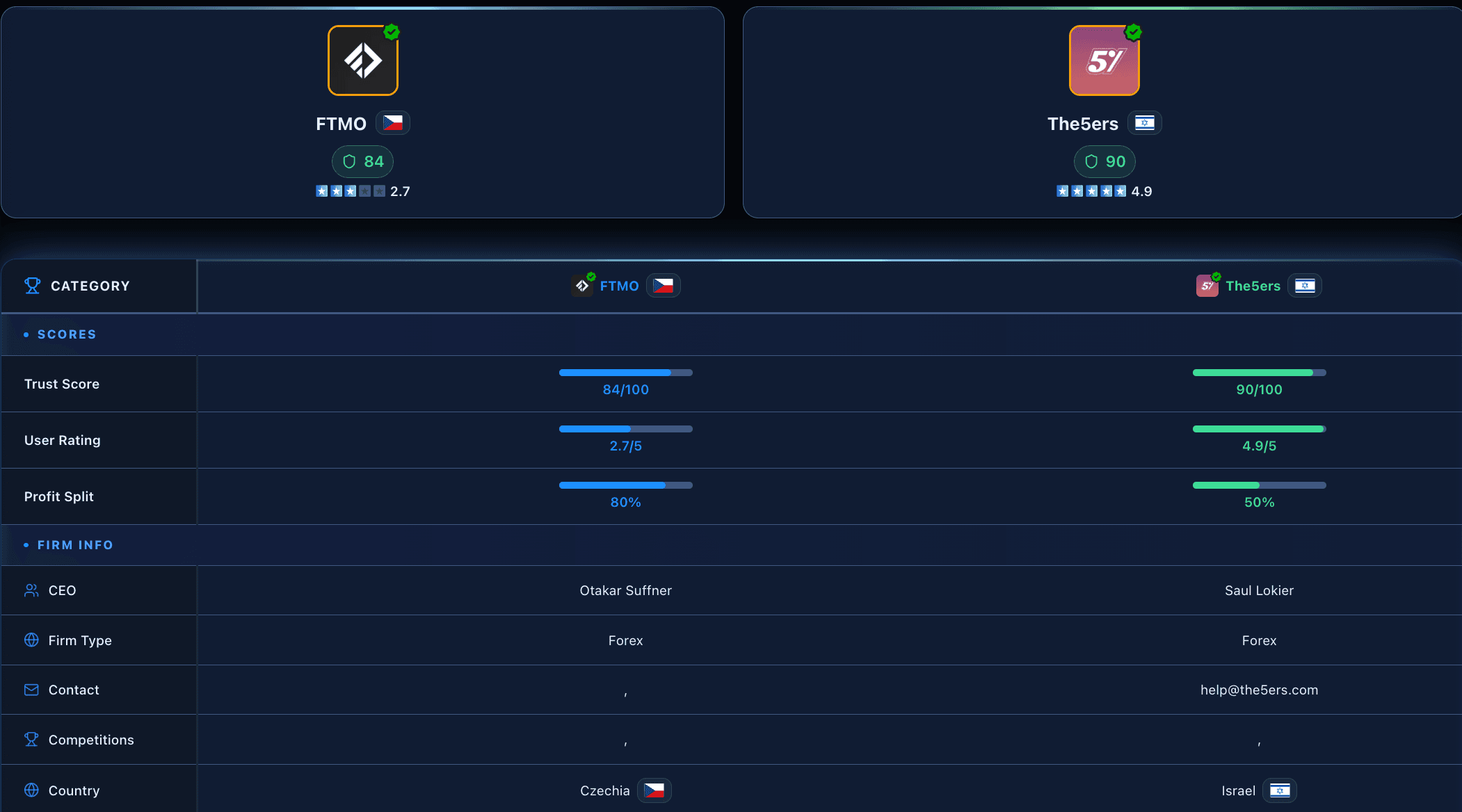
A comparison built around shared attributes
A real comparison selected through the public tool. The view demonstrates information structure, not the accuracy of trading conditions or a recommendation to use a firm.
View the public source